

Mooncake & Tea Pairings to Celebrate the Mid-Autumn Festival | 中秋节

Autumn is the traditional season of harvest. It is a time to reflect on what you are thankful for and to gather with friends and family. Here in the U.S., we have Thanksgiving, but many cultures in Asia have been celebrating autumn and moon festivals for centuries. I will be exploring the Chinese festival, but other countries may share similar traditions.
Origins
The Mid-Autumn Festival, also referred to as Mooncake Festival, is the second largest festival in China (only behind Chinese New Year). Like all Chinese festivals, it is decided by lunisolar cycles. This festival is celebrated on the 15th day of the 8th lunar month. Usually that occurs in mid-September through early October. This year it falls on Monday, October 6th.
Celebrations of the autumn harvest and reverence to the gods appeared more than 2,000 years ago in ancient Chinese history. It is believed that legends of the full moon became associated with these celebrations that evolved into the Mid-Autumn Festival during the Song dynasty. It was during the Northern Song dynasty (960- 1279) that its timing was designated.
Like most Chinese celebrations, the origins of this festival are full of colorful legends. The most commonly told legend goes something like this: Originally, there were 10 suns, and the land was threatened to be scorched. Legendary archer Hou Yi shot down the excess nine. As a reward, he was given an elixir that would grant him immortality in the heavens. However, he was married to Chang'e and did not wish to leave her, so he kept the elixir. Once when he was away, a villain who knew of the elixir tried to force Chang'e to give it up, but she consumed it rather than allowing him to obtain it. As she ascended, she settled on the moon, as it was the closest to her beloved husband. Devastated upon returning, Hou Yi began a tradition of preparing a large feast of her favorite foods on that day.
Traditions & Celebrations

Celebrations include playing with lanterns, moon gazing, and praying to the moon for family, happiness, and success. The most fun tradition is, of course, mooncakes! Making and sharing mooncakes is a hallmark of the festival. The round shape of the moon symbolizes unity and harmony. The full moon can also symbolize reunion. Therefore, family reunions are arguably the most important part of the holiday. Big family feasts and the sharing of mooncakes with tea or wine reinforce the idea of completeness and familial unity. Mooncakes are also given as holiday gifts.
What are Mooncakes?
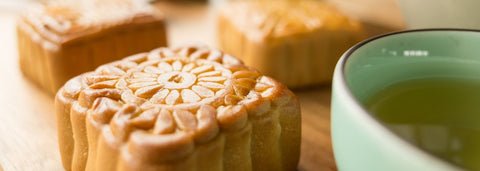
The dough and consistency vary by region, but generally, mooncakes are square or round pastries containing a dense filling of sweet and sometimes savory ingredients. They are shaped by a wooden mold that creates an ornate design on top and baked. There is a wide range of ingredients, from traditional dates, nuts, fruit, sesame, plums, red beans, and egg yolks to the more modern, such as alcohol-flavored and chocolate, custard, and tea flavors. They are becoming increasingly popular in the U.S. and can be usually found in Chinese bakeries. We are thrilled to be selling them for the season provided by Jeng Chi!
Tea + Mooncake Pairings
There are so many mooncake flavors and textures. Picking the right tea can help
accentuate flavors and cut through rich fillings. Here are some of our favorite
pairings:

Red Bean + Green Dragon
We love how the sweet, earthy, and nutty flavors of the red bean filling are perfectly complemented by this unique green and oolong blend.

Lotus & Yolk or Red Bean & Yolk + Oolong like Amber Goddess
This traditional filling is sweet and savory and deliciously rich. A mid- or heavily-
oxidized oolong helps cut through any oiliness from the cake and provides a
wonderful balance.

Five Nut + Aged Pu'er like our Menghai Cake
This flavor can contain a heavy blend of nuts, seeds, dried fruit, and even dried ham! The flavorful sweet and savory fillings need a bold tea that can stand up to the rich flavors. The earthy tea notes complement the nutty flavors.

Coconut + Orange Blossom
Oolong is a great base to cut any heaviness of the mooncake while allowing you
to savor the sweet, fruity notes that are complemented by the floral notes of the tea.

(Jujube) Date & Nut + Empereur Chen-Nung or Snow Jasmine
A favorite flavor of cake! The combination of the date and the smokiness of Empereur Chen-Nung helps accentuate secondary flavors of this mooncake, especially when there are nuts.
Or if you are not a fan of smoky teas, Jasmine tea is a lovely option. The brightness of the tea lightens the density of the cake, while the floral and aromatic notes balance the richness of the date and walnut.

Mango, Strawberry, and other fruity cakes + Orange Sunset Rooibos
The tartness of the caffeine-free tisane helps balance the sweetness of the mooncakes, while the juicy citrus complements the fruity flavors!
Custard + Dragonwell or Iron Goddess
The custard filling is sweet and creamy but not too dense. Buttery notes are
enhanced with the light vegetal and creamy notes of the teas.

Very Sweet/Chocolate + Keemun Hao Ya or Dallas Bold Coffee
This bold but smooth black tea is a great pair to very sweet, snow skin, and chocolatey mooncakes. It tones down the sweetness and allows the flavors to shine.


Comments