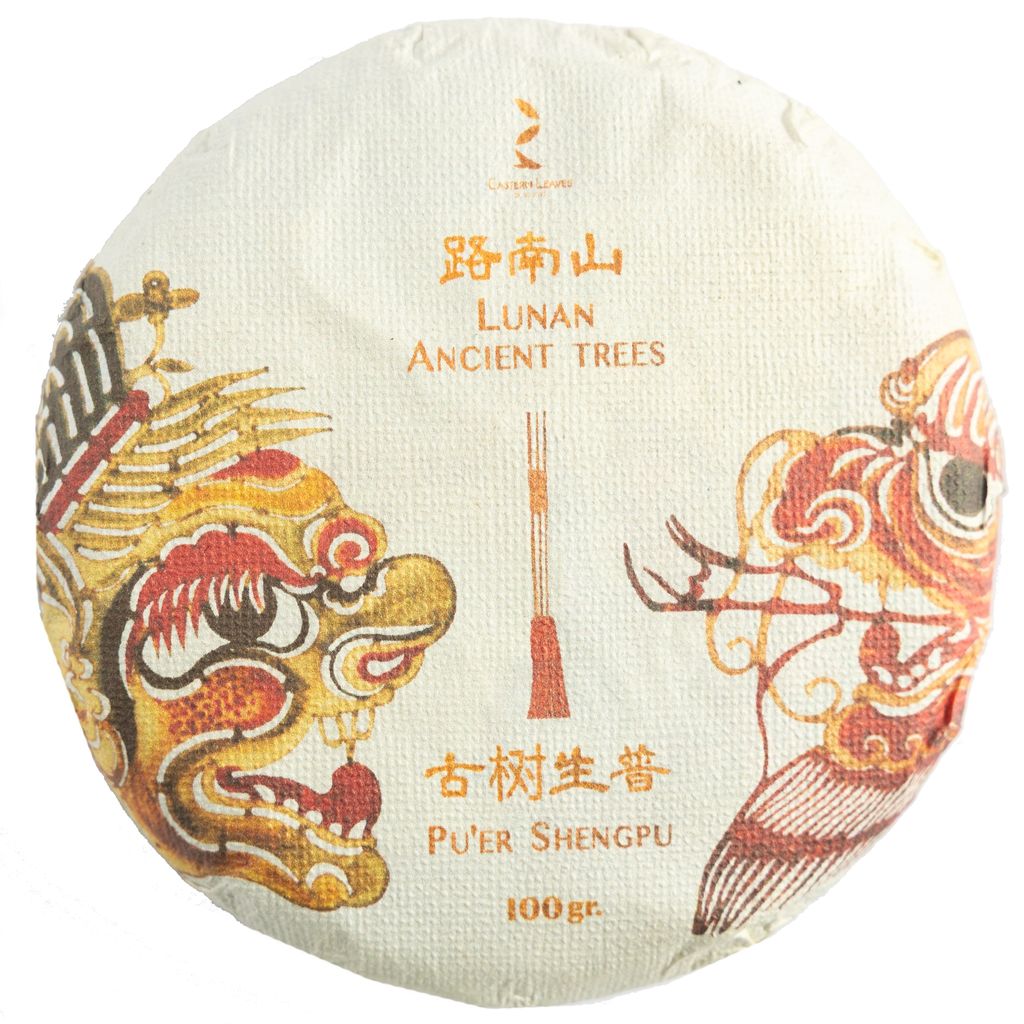
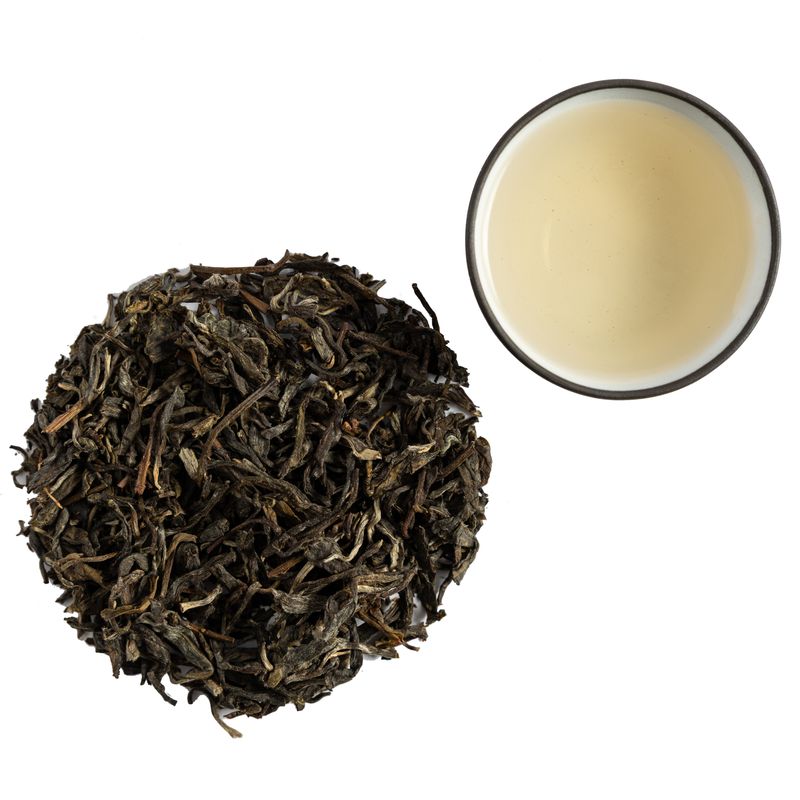
Ancient Trees, combined with rich soil, create a flavor bouquet of wild honey, lychee, pineapple, purple iris, and forest, with a lingering, mouthwatering finish.
Tea Type or Tisane | Flavors: Sheng Pu'er| wild honey, lychee, pineapple, herbs, purple iris, sweet potato, forest
Tea Tips: The complex flavors of this tea are best enjoyed using Eastern brewing directions, allowing for multiple steeps.
Ingredients: China, Lunan Mountain, Xishuangbanna, Yunnan Province Pu'er tea: 100%
How to Steep: Eastern: 1 gram per 20 ml water, 185-195 F; give a quick rinse, then begin with a 10-second steep; increase by 10-20 seconds with each infusion. Western: 2 grams per 6-8 oz. water, 185-195 F, 2-3 minutes
Fun Fact #1: Sheng Pu'er is one of two types of Pu'er tea (the other being Shu). Sheng is aged naturally over time. Young shengs tend to be more assertive, while the passage of time rounds out flavors and enhances sweetness. This tea is already well-balanced, and time will only enhance these qualities. Many connoisseurs of Pu'er will buy one cake to enjoy now, and another to age for later!
Fun Fact #2: Sheng Pu'er has many of the same health benefits of green tea, as it is processed similarly. That means it is full of catechins such as EGCG (epigallocatechin gallate), EGC (epigallocatechin), EC (epicatechin), and ECG (epicatechin gallate).
Fun Fact #3: Shu (sometimes spelled Shou) is the other Pu'er type. Unlike Sheng, Shu is aged quickly (usually a few months) in an indoor, temperature and humidity-controlled environment. This results in a fully-fermented tea which is very different-tasting than a young sheng: smooth, full-bodied, sometimes with nutty, cocoa, smoky, woody, or fruity notes, but generally lacking the sweetness and complexity of sheng. Both types have unique flavors and benefits. Pu'er fanatics often drink both types!
Similar Teas: Autumn Harvest Sheng, Dragon Pearls, 2008 Liminted Edition Raw Pu'er Cake, Heirloom Raw Pu'er Cake